

Click below to listen to this article
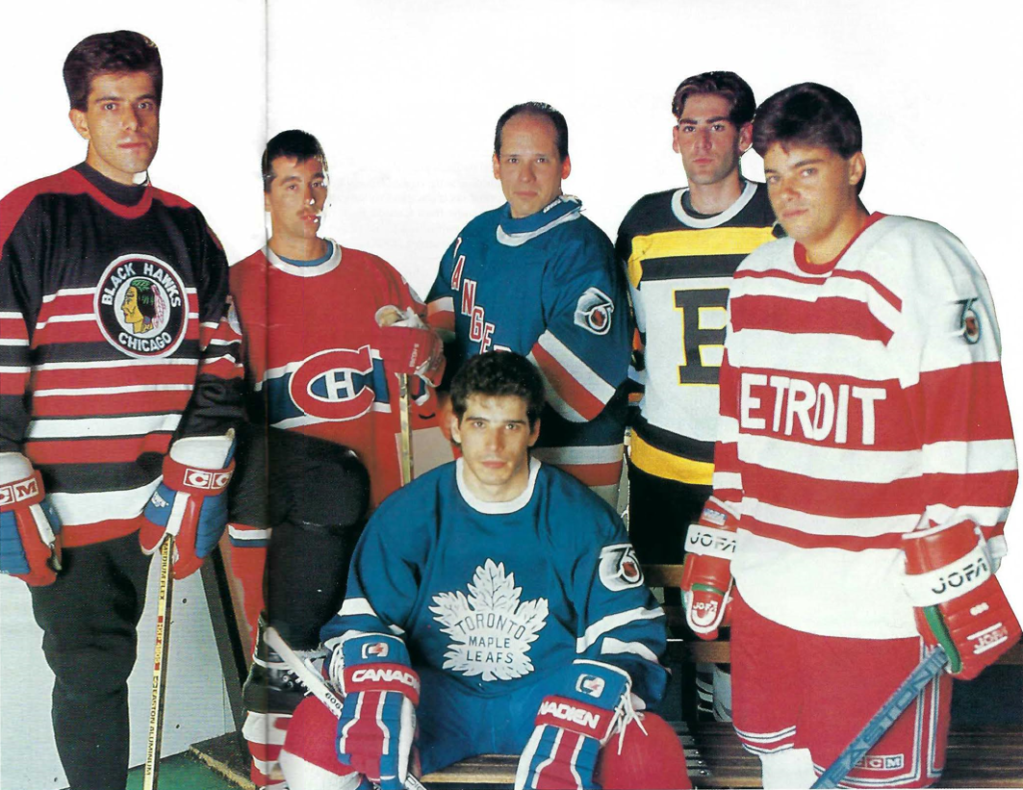
The 1991-92 season marked the 75th anniversary for the NHL and it became a point of focus for the league to treat the year as a series of celebrations honoring their history. The first games of the season saw the original six teams face off against one another, with the visiting teams traveling by train to the host team’s city. Instead of their typical jerseys, the NHL had designed special ones – just for these six clubs – to wear in the games.
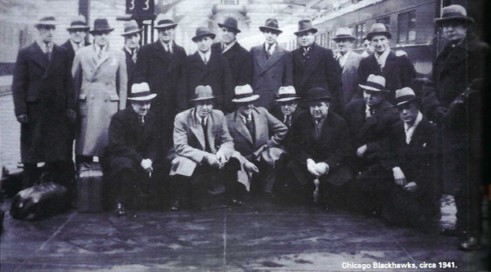

Much like the train ride to the games was done to convey a sense of an earlier era, the jerseys were designed to make the person looking at them think of earlier times. That’s because each one was designed to look like the ones the clubs wore back in the 1930s and 40s. Looking at them was like you were turning back the clock.
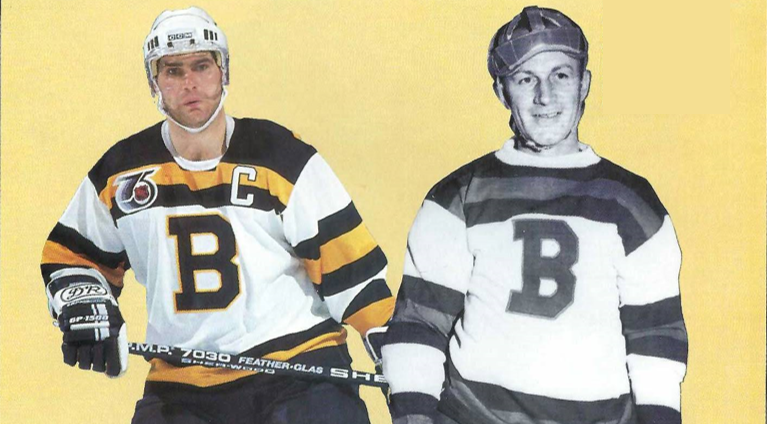
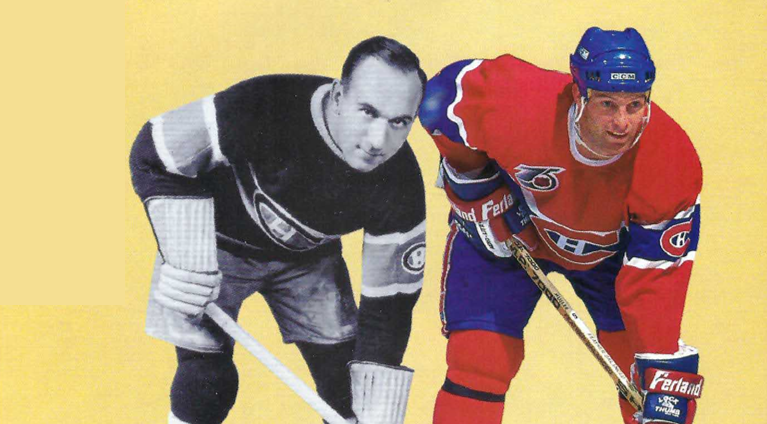
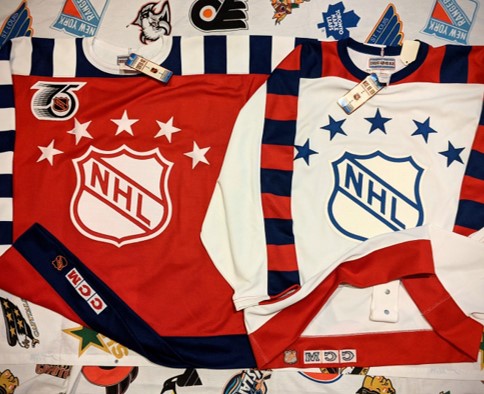
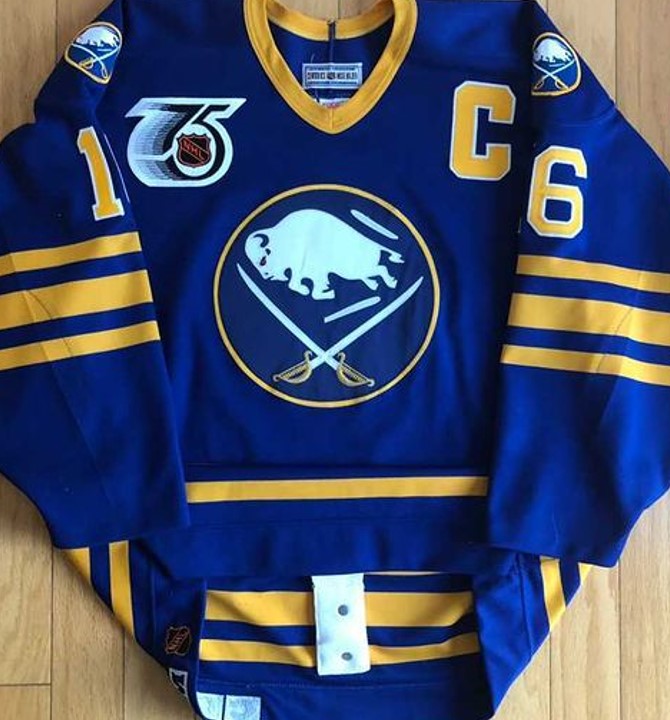
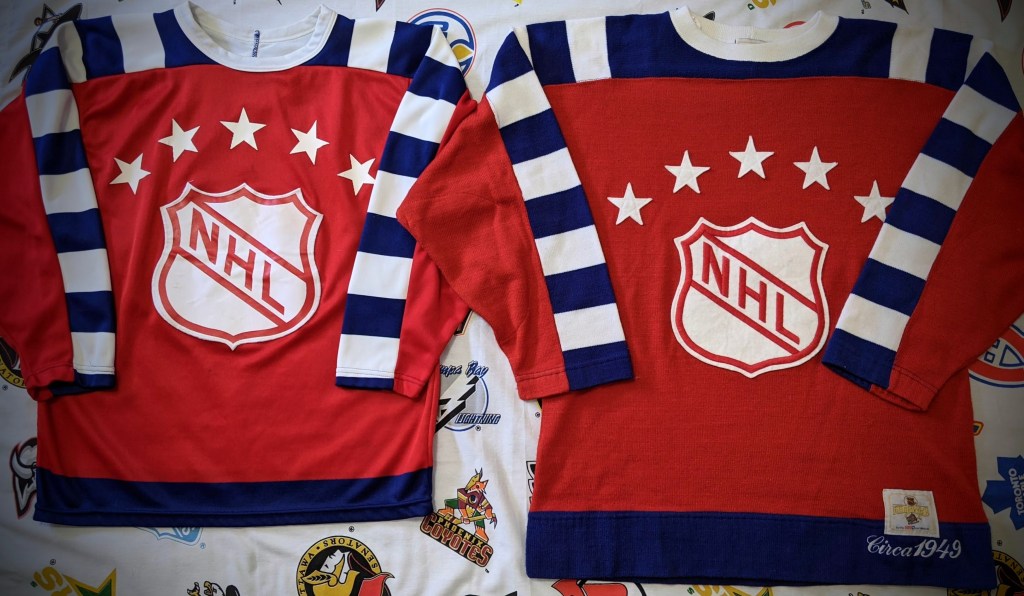
The league found ways for all teams to participate in the anniversary celebration using their jerseys. First, the NHL designed an incredible 75 year anniversary logo – arguably the greatest logo in NHL history – and had all teams wear it as a patch on their jerseys for the entire season. The other was by way of the All-Star Game. Much like the original six teams called back to an earlier era, the NHL ASG jerseys called back to the same era, the 1940s, and the players donned an updated version of their first official NHL All-Star Game jerseys.
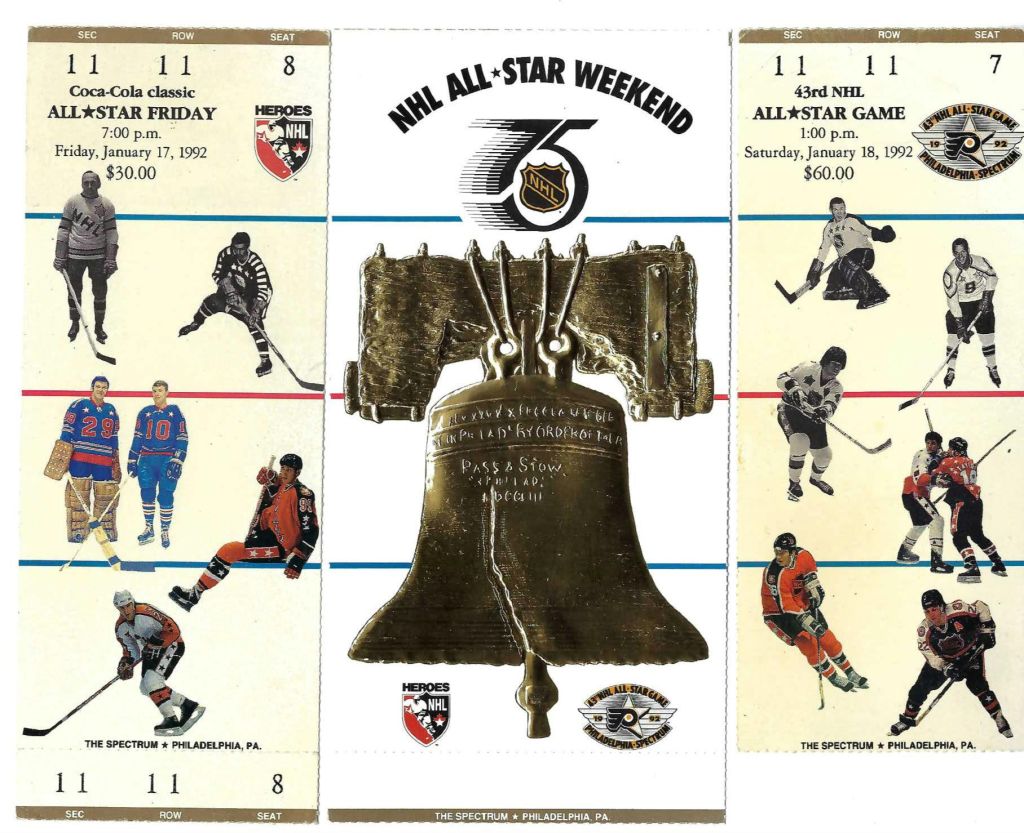
The motto of the league for the year was “lightning on ice” and so there was certainly this sense that any logo had to convey speed and quickness. The 75 logo design put a black 7 and 5 next to each other, and in the circle of empty space between them, the NHL shield was placed in the middle. The numbers have streaks coming off of their left side, providing the illusion they’re moving rapidly from left to right, and the whole shape itself being quite circular makes the whole shape look like a like a streaking hockey puck.
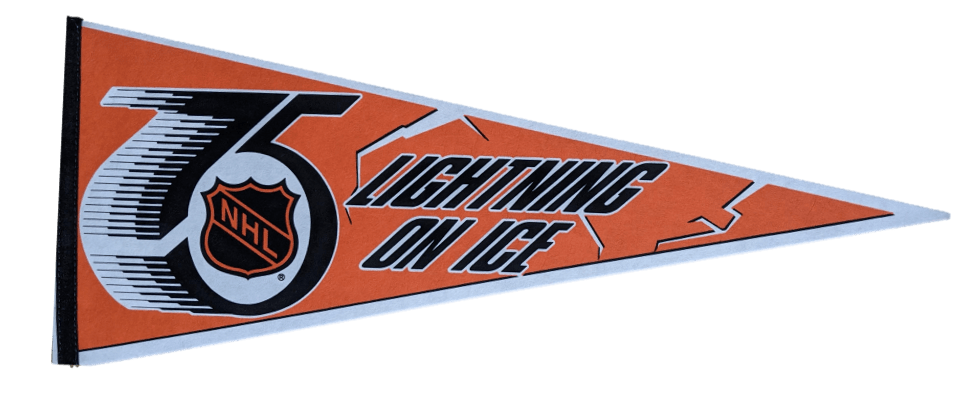
At first glance, the decision to have every team wear a patch seems trivial. After all, the NHL made a 100 year patch and every club wore that one on their jerseys in 2017. But back in 1992, the concept of having a league-wide patch on all the jerseys was unproven territory. The NHL was putting patches on all teams come playoffs by the 90s, but a league-wide patch worn by all teams during the regular season was new territory. It’s not like there was a 50 year anniversary patch to act as a precedent.
While the 75 logo was everywhere all season long, the Turn Back The Clock (TBTC) jerseys were not. They were worn at first intentionally just among the original six teams playing each other, but then that proved a little difficult because of the color schemes involved, so it turned more into just randomly during the season. Then of course the All-Star Game versions were a one-game-only situation. Much like today, jerseys for special events back then were manufactured at lower quantities compared to a team’s official set of home and away jerseys. Unlike today, however, jerseys in general were produced at far lower overall quantities for the fans back then, making the accessibility to these jerseys extremely limited.
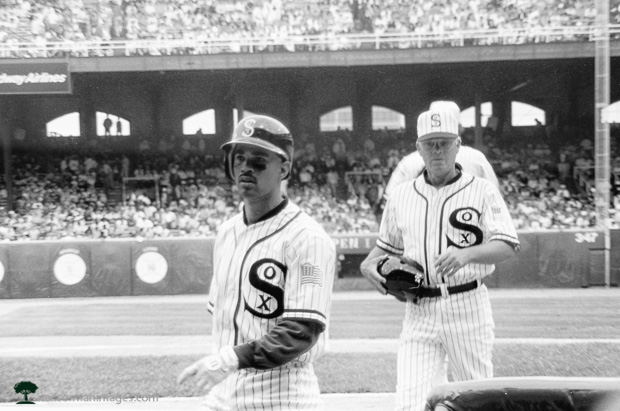
The NHL, like the other pro leagues, was still learning the retail jersey market. Even the whole concept of a throwback night in pro sports was relatively new, and is believed to be pioneered only a few years prior when the Chicago White Sox turned back the clocks and wore their uniforms from 1917 (the last time they won the World Series at Comiskey Park) on July 11, 1990. The game also featured a manual scoreboard. Baseball fans loved it, hockey fans loved the TBTCs. The concept of the retro jersey was born.
What jerseys that were made available for sale back then – just like today with the reverse retros – were quickly snatched up. Even the NHL teams were trying to take part in the craze. For the second half of the season, the Sabres wore their road jerseys at home (back then road jerseys were dark colors so it was blue) to complement the “original six” teams who wore “throwback jerseys.”
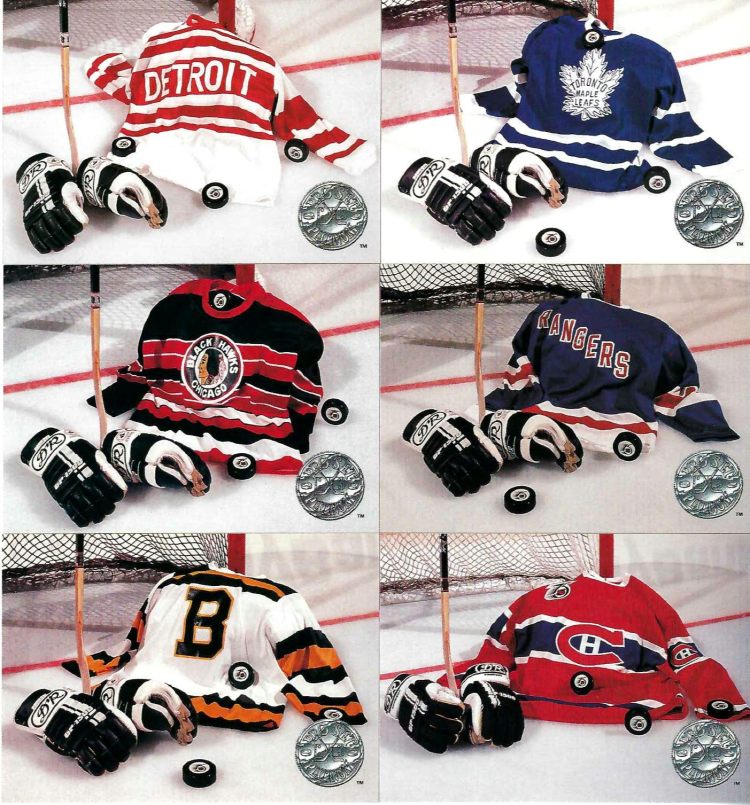
The overwhelmingly positive response from fans propelled the NHL’s decision to move forward with their next jersey project: the CCM Heritage line of sweaters. These were produced in the summer and fall of 1992, with 18 total sweaters produced over the course of 2 years, and featured both current and now defunct NHL teams like the Montreal Maroons and New York Americans. The CCM Heritage line was the predecessor to the CCM Vintage line we know today. We will cover more on the CCM Heritage line of sweaters in a different blog post, but it’s worth mentioning that from those 18 original sweaters, 6 of them bear a striking resemblance to the TBTC designs.
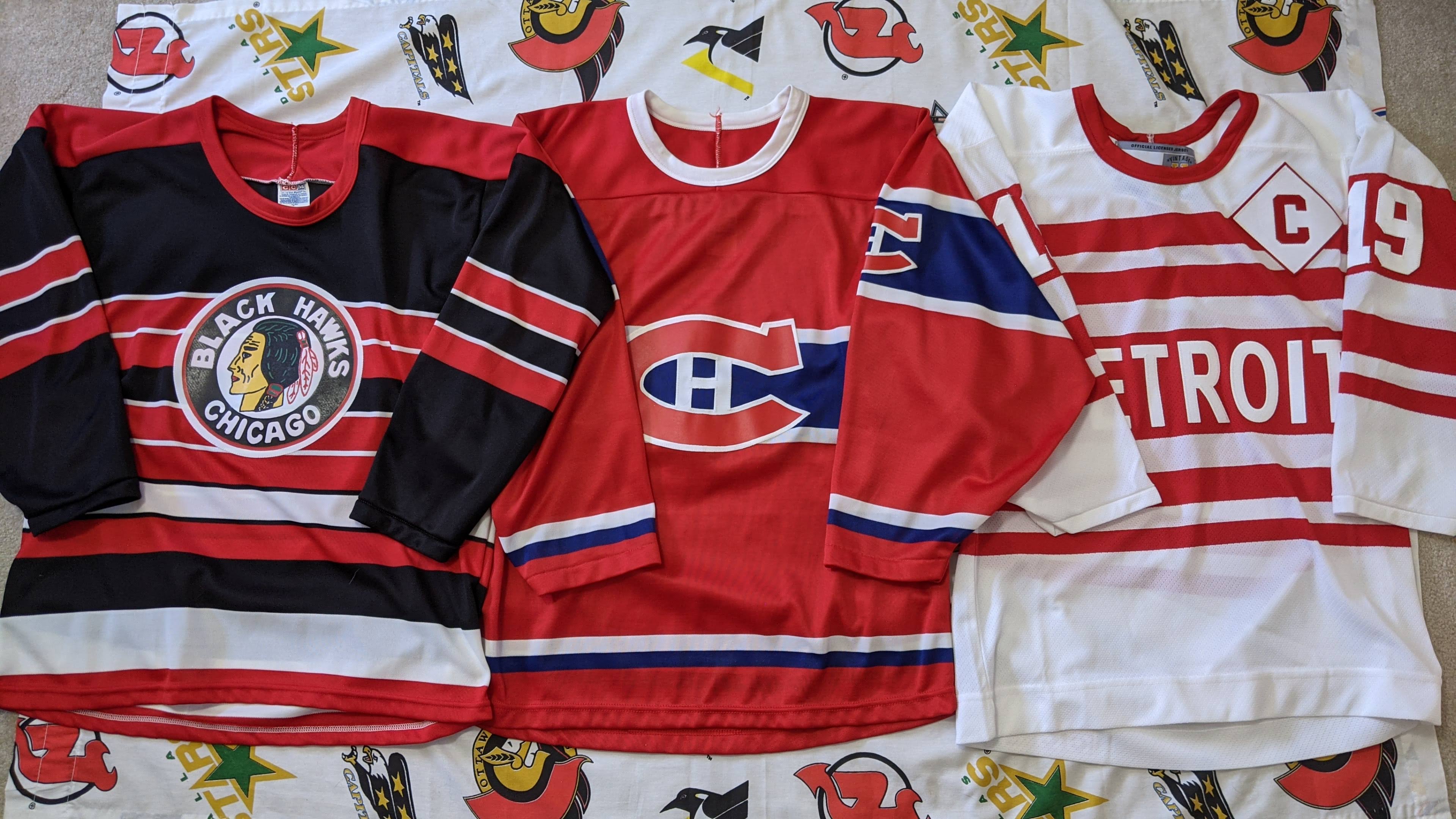

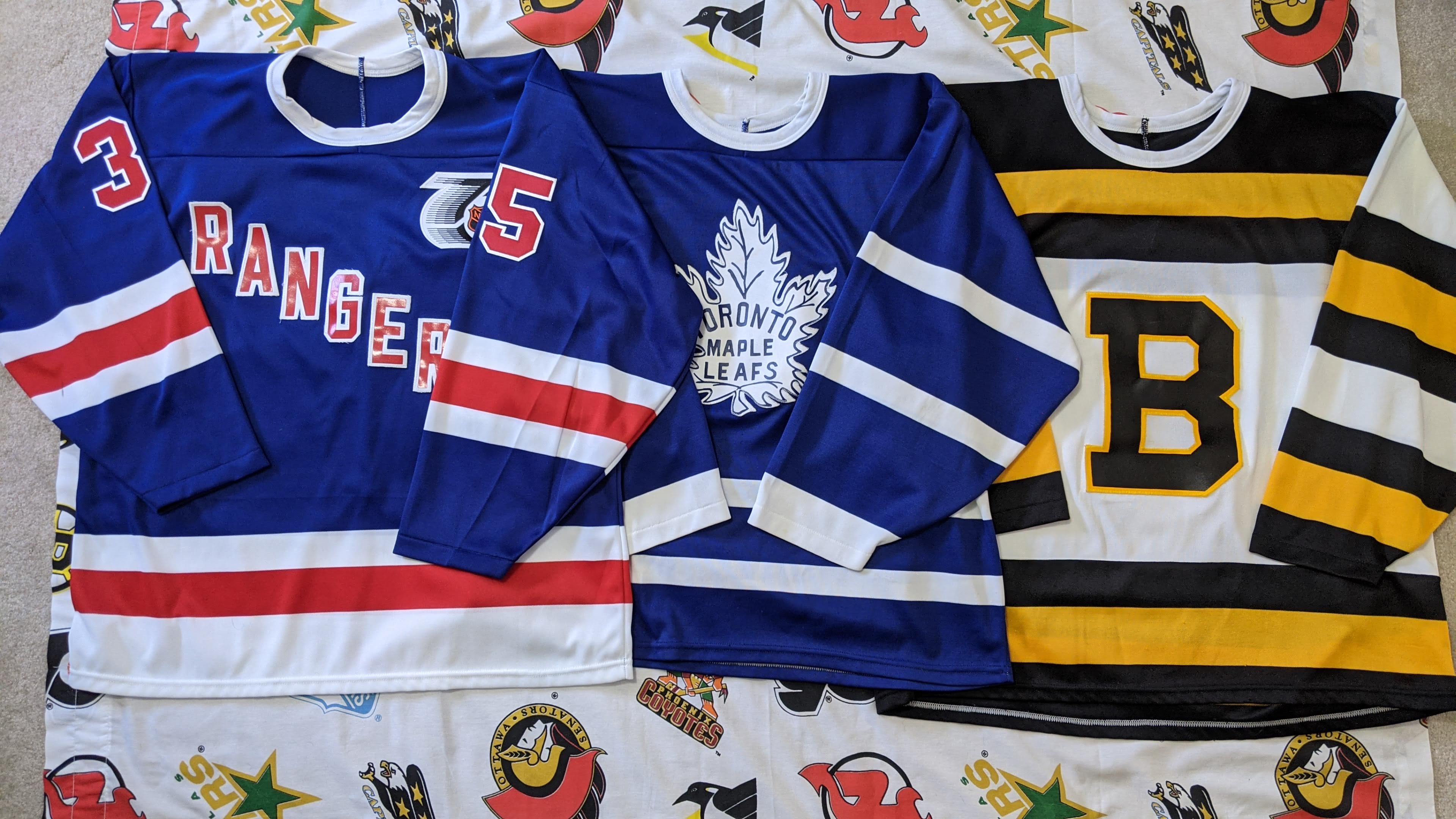

As far as jersey collections go, if you own one, two, a few – or all eight TBTC jerseys, you are one lucky collector. These are rare because there were never a lot produced and those that were are now twenty years old. Putting real dollar amounts on their value is tough since the pricing fluctuates, but it’s safe to say the TBTCs sell for approximately 2-3x the price of a comparable, non-TBTC jersey from the same season. CCM Authentic jerseys are potentially some of the hardest and most sought after CCM authentic jerseys ever made just because of the combination of quality materials a CCM Authentic was made with back in the 90s, and the rarity of the jerseys. Happy hunting everyone. Also, let me know if you see any for sale 🙂 – Dan

 Hockey Jersey Addicts